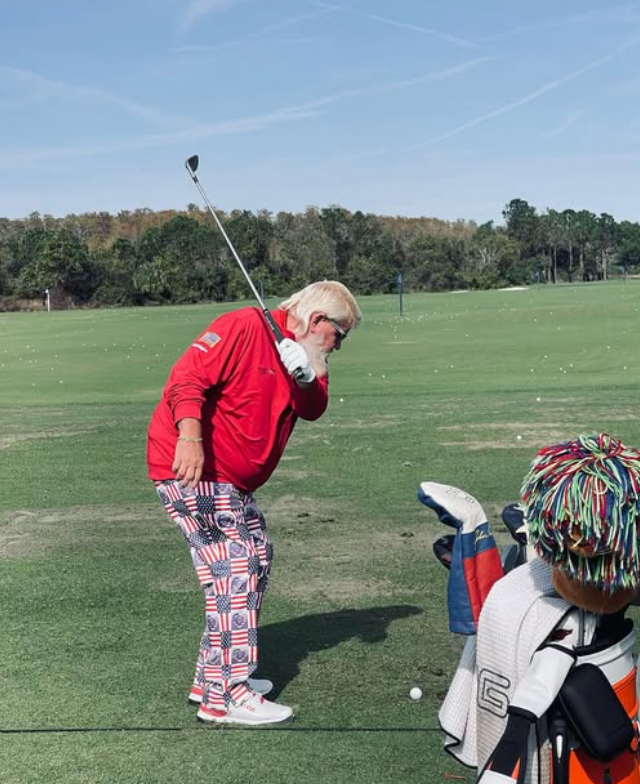
Introducing the Career Golfer
Hello, World.
I peaked at a 4 handicap in high school, managing a top-15 finish at the state tournament to cap off a less-than-illustrious junior golf career. Then I stopped playing seriously for about a decade.
That's the short version. The longer version involves college, a career that consumed most of my waking hours, and the slow realization that the thing I cared about most as a teenager had become something I did once a month out of habit. For ten years I was around a 9 handicap (never official) who played well enough to not embarrass himself and poorly enough to never improve. The game was in the background, familiar but unserious.
In 2021, something shifted. As we can all probably relate, the COVID lockdowns had some strange consequences. For me, I started caring about golf again. I was working 60-plus hours a week at a demanding job, but I found time late evenings, weekends, and whatever I could carve out to practice once or twice a week. My scores started improving slightly. High 70s on good days. Low-to-mid 80s most days.
In 2022 I started practicing at least twice a week and playing every couple weeks (including in a simulator / indoor golf facility during the winter). The gap between my good rounds and bad rounds began to close. Mid-to-high 70s stopped feeling like outliers.
In 2023 I did something I hadn't done since I was a teenager: I entered a tournament and started tracking my scores. I also started working with a coach. My scoring average for the year was 82, with a low of 77 and a high of 89. The practice rounds were encouraging. The competitive rounds were a different story, as I would inevitably fall apart sometime during the round, if not from the first tee shot. I was capable of shooting 77 and instead posting 87 because I couldn't manage my own head and too frequently suffered penalty strokes from the “big miss.” That was the hardest part of the year. Not the swing. The space between my ears.
2024: scoring average dropped to 79. Low round of 73. High of 82. The competitive rounds got more consistent. I reduced the strokes lost to mental errors but was still fighting the “big miss.” I was encouraged because I was primarily losing strokes to legitimate skill gaps I could actually work on (which was basically every facet of my game).
2025: I started working with a new coach and reduced my scoring average to 76. I won a small local tournament and shot a 72 in competition, the lowest competitive round of my life. My handicap kept falling and I felt confident I had mostly contained the big miss.
2026: Five rounds in, I am averaging 77 shots per round. The season has gotten off to a slow start but the handicap is at an all-time low of 1.2.
I am not scratch. Not yet. But I have never been closer, and I am doing this while working a demanding full-time job where work demands often require not playing or practicing for weeks on end.
This is what Career Golfer documents.
The actual process of improving my single-digit handicap as a working adult. Career person first, golfer second (well, after family man and friend). Not generic tips but rather what I am trying, have tried, and what I have learned. A real, honest record of one golfer's grind: the practice sessions that worked and the ones that didn't, the tournament rounds with mistakes included, the equipment decisions, the mental game work that finally started clicking, and the math of trying to cut 1.2 more strokes from a handicap that seemingly does not want to move.
I look forward to sharing this journey with whoever wants to come along for the ride.
- CG